Early colonial Cuba
Diego Velázquez de Cuéllar in Cuba: Conquest and Colonial Rule
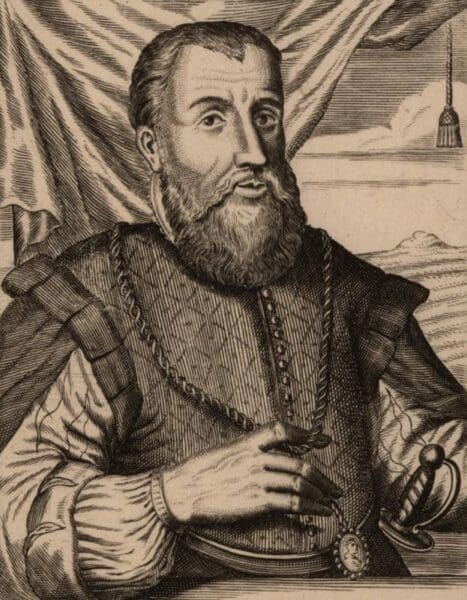
Diego Velázquez de Cuéllar led the Spanish conquest of Cuba beginning in 1511 and governed the island until his death in 1524.
Quick answer: Diego Velázquez de Cuéllar was the Spanish conquistador who led the conquest and colonization of Cuba beginning in 1511 and became the island’s first Spanish colonial governor. His rule helped establish early Spanish towns while imposing violent colonial control on Indigenous communities.
Important date correction
The reliable historical marker is 1511, when Velázquez began the conquest and Spanish settlement at Baracoa. A precise arrival date of September 27, 1513 is not sufficiently supported by the historical references used for this guide.
Who was Diego Velázquez de Cuéllar?
Born around 1465 in Cuéllar, Castile, Velázquez took part in Christopher Columbus’s second voyage to the Americas in 1493. He later established himself in Hispaniola and gained political and economic influence within the Spanish colony.
In 1511, Diego Columbus, governor of Hispaniola, placed him in charge of an expedition to conquer and colonize Cuba. Velázquez became the island’s first colonial governor and remained in office until his death in Santiago de Cuba in June 1524.
The conquest of Cuba beginning in 1511
The expedition first established itself in eastern Cuba near Baracoa. This was not a neutral exploration. It involved armed conflict, the dispossession of Indigenous communities, the encomienda system and forced labour.
The Taíno leader Hatuey, who had come from Hispaniola, organized resistance against the Spanish advance. He was captured and executed in 1512 and later became one of Cuba’s best-known symbols of Indigenous resistance.
The first colonial towns
Under Velázquez, the Spanish founded or developed several early colonial settlements, including Baracoa, Bayamo, Trinidad, Sancti Spíritus, Puerto Príncipe, Santiago de Cuba and Havana. Exact dates and original locations differ among sources.
Havana moved several times before being established at its present location in 1519. Santiago de Cuba served as the main colonial seat for much of the sixteenth century.
Cuba as a base for expeditions to Mexico
Velázquez’s government turned Cuba into a base for further Spanish expeditions. He supported the voyages of Francisco Hernández de Córdoba in 1517, Juan de Grijalva in 1518 and Hernán Cortés in 1519.
Velázquez and Cortés soon came into conflict. Cortés continued toward Mexico despite the governor’s attempts to regain control of the expedition.
How to understand this legacy
Velázquez played a major role in the creation of colonial institutions and cities, but those developments came with violence, exploitation and a demographic collapse among Indigenous peoples caused by warfare, forced labour and introduced diseases.
Related English guides
Summary
Diego Velázquez de Cuéllar led the Spanish conquest of Cuba from 1511, governed the island until 1524 and helped establish its early colonial towns. His legacy must also be understood through the violence and exploitation imposed on Indigenous communities.
📩 Abonnez-vous à notre Newsletter
Recevez directement nos dernières nouvelles, bons plans et astuces de voyage à Cuba 🌴