Cuban history and national symbols
The Cuban flag: history, meaning and the Lone Star
Known as La Estrella Solitaria, the Cuban flag connects the island’s nineteenth-century independence movements with national identity, public ceremonies and everyday life.
Cuban flag meaning: quick answer
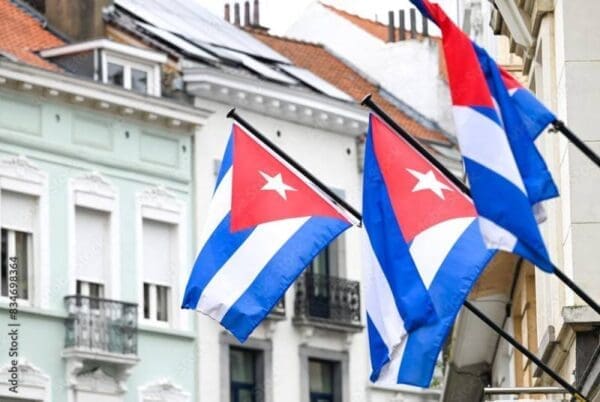
What does the Cuban flag mean? The flag is red, white and blue, with five horizontal stripes and one white star. It has three blue stripes for colonial-era divisions, two white stripes associated with purity and independence, a red triangle linked to courage and sacrifice, and a white lone star representing liberty and a sovereign Cuba. The design dates to the nineteenth century and became the official national flag in 1902.
Who created the Cuban flag?
The design is generally attributed to Narciso López and Cuban poet Miguel Teurbe Tolón. The project developed among Cuban exiles in New York around 1849 during opposition to Spanish colonial rule.
Teurbe Tolón prepared the final drawing, while his wife, Emilia Teurbe Tolón, is often credited with sewing one of the earliest examples.
When was it first raised in Cuba?
The flag is closely associated with Narciso López’s expedition to Cárdenas in May 1850. This makes Cárdenas, located near Varadero, an important place in the history of the national symbol. The flag was officially adopted on May 20, 1902.
What do the colours and shapes mean?
| Element |
Generally accepted meaning |
| Three blue stripes |
The three administrative or military divisions of colonial Cuba. |
| Two white stripes |
Purity of ideals and the desire for independence. |
| Red triangle |
Courage, sacrifice and the struggle for freedom; its form is also linked to Masonic influences. |
| White star |
Independence, liberty and a sovereign Cuban state. |
Why is it called La Estrella Solitaria?
The expression means “the Lone Star.” It refers to the single white star in the centre of the red triangle, one of Cuba’s most recognizable national symbols.
Did the flag change after 1959?
No. The same national flag remained in use after the Cuban Revolution. Its continuity shows that it represents a national history extending beyond one government or political period.
The flag in everyday Cuban life
The flag appears in schools, public buildings, commemorations, sporting events, homes and workplaces. Its meaning can vary from one person to another, but it remains strongly connected to national identity and collective memory.
Respect and photography
Photographing the flag in a public place is usually straightforward. Avoid disrespectful staging or jokes involving a national symbol that may carry deep personal meaning for residents.
Connect the history with a local visit
Cárdenas is the most relevant nearby destination for travellers staying in Varadero because of the flag’s first documented use on Cuban soil in 1850.
Key takeaway
The Cuban flag emerged from nineteenth-century independence movements. Its stripes, triangle and star symbolize colonial divisions, sacrifice, freedom and the idea of a sovereign Cuban nation.
📩 Abonnez-vous à notre Newsletter
Recevez directement nos dernières nouvelles, bons plans et astuces de voyage à Cuba 🌴