Travellers with reduced mobility should verify room access, elevators, pathways, beach access and transportation before booking.
Travelling to Cuba with reduced mobility requires more advance planning than simply requesting an accessible room. Resort layouts, elevators, pathways, transportation and equipment availability can vary, so confirm each essential need directly before departure.
Choose the hotel by layout, not only by star rating
A large resort may involve long distances between the lobby, restaurants, pool and beach. Ask for a room near the services you use most, and request the ground floor when elevator reliability is a concern.
Questions to ask before booking
- Is there step-free access from reception to the room?
- Does the assigned building have a working elevator?
- What is the doorway width?
- Does the bathroom have a roll-in shower or a raised threshold?
- Are grab bars installed beside the toilet and shower?
- Can a wheelchair reach the buffet, pool and beach access point?
- Is an accessible airport transfer available?
Wheelchairs and mobility equipment
Bring essential personal equipment whenever practical. Do not assume that a hotel can supply a suitable wheelchair, shower chair, walker or replacement part. Label equipment clearly and carry photos showing how it should be handled or assembled.
Airport and transfer planning
Request airline assistance in advance and reconfirm it before travel. Keep medication, documents, chargers and mobility essentials in carry-on baggage. Confirm whether the transfer vehicle can accommodate the traveller and equipment without disassembly.
Beach access
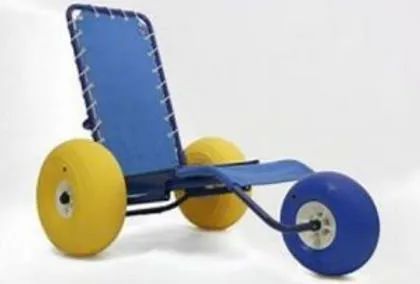
Even when a resort is generally accessible, sand can be the main obstacle. Ask whether there is a firm path, boardwalk or beach wheelchair. Conditions may change after storms or erosion.
Power outages and elevators
Power interruptions can affect elevators, lighting and charging. Travellers who depend on powered equipment should discuss backup options with the airline, hotel and equipment provider before departure.
Medication and health preparation
Carry enough medication for the full trip plus a reasonable reserve, along with prescriptions, insurance details and a concise medical summary. Keep these documents offline and in paper form.
Travelling with a companion
Agree on a practical plan for transfers, meals, excursions and emergencies. A companion should know where documents, medication and equipment instructions are stored.
Request measurements and recent proof
Do not rely only on the word “accessible.” Ask for recent photos or measurements when doorway width, turning space, bed height, space beside the bed, shower threshold, grab bars or balcony access are essential. Keep written confirmation offline because room assignments can still change.
Pool access and mobility equipment backups
Ask whether the pool has a ramp, lift or only ladders, and whether any beach wheelchair is currently available and operational. Bring a compact repair kit, labels for removable parts and appropriate spare tubes, fuses, cables or chargers when relevant.
Transfer details to confirm
Tell the provider whether the wheelchair folds, its dimensions and weight, and whether the traveller can transfer into a standard seat. Confirm ramp or lift availability, secure storage and a backup vehicle when the assigned transfer is unsuitable.
Related planning guides
Best practice: obtain written confirmation for every essential accessibility requirement and keep a backup plan for elevators, transfers and equipment.
📩 Abonnez-vous à notre Newsletter
Recevez directement nos dernières nouvelles, bons plans et astuces de voyage à Cuba 🌴