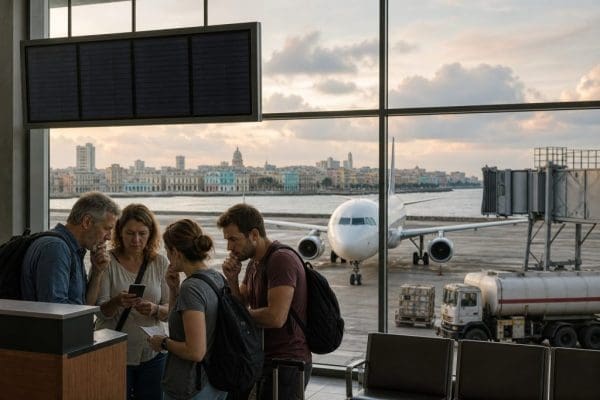
Canadian travellers in Cuba should know how to contact their insurer, airline, hotel and Canadian consular services before an emergency occurs. Internet access and telephone service can be inconsistent, so important contact details should be stored both offline and on paper.
Quick answer: in an immediate local emergency, seek help from hotel staff, local authorities or medical services. For consular assistance, use the current contact instructions published by the Government of Canada. Consular officials can provide guidance, but they do not replace travel insurance or pay personal expenses.
Prepare an emergency contact sheet
Create one short document that can be opened without Internet access. Include:
- passport number and a secure passport copy;
- travel insurance company, policy number and assistance telephone number;
- airline and tour operator contacts;
- hotel or casa name, address and telephone number;
- a trusted contact in Canada;
- important medical information and medication names;
- the current Government of Canada consular assistance instructions.
Give a copy to a trusted person in Canada and keep another copy separate from the original passport.
Use official Canadian consular information
The Government of Canada maintains current travel advice, embassy information and a 24-hour emergency assistance process for Canadians abroad. Because telephone numbers and procedures can change, verify the current information before departure on the official Canada travel advice for Cuba and emergency assistance pages.
Canadian consular services may provide guidance in situations involving a lost passport, arrest, hospitalization, accident, victimization or a large-scale emergency. The type of assistance available depends on the circumstances.
What consular officials can and cannot do
Consular officials can explain local processes, provide information about replacement travel documents and help Canadians communicate with appropriate services. They may also provide lists of local professionals or contact family in Canada with permission.
They generally cannot:
- pay hospital, hotel, legal or transportation bills;
- guarantee medical treatment;
- cancel local laws or court decisions;
- replace a travel insurer;
- arrange preferential treatment;
- guarantee evacuation from Cuba.
Comprehensive travel insurance and an emergency payment plan remain essential.
Medical emergencies
Contact the travel insurer’s assistance centre as early as possible. The insurer may provide instructions, referrals or approval for treatment and transportation. Keep the policy details available offline and ask for written records of medical care, prescriptions and payments.
Travellers should bring sufficient prescription medication in its original labelled packaging. Review the healthcare in Cuba guide and the medication and pharmacy planning guide.
Lost or stolen passport
Report a stolen passport according to the instructions provided by Canadian officials and local authorities. Contact Canadian consular services promptly and follow their directions for obtaining a document that permits travel. Do not wait until the departure day.
Detailed steps are available in the lost passport in Cuba guide.
Lost money or bank cards
Contact the card issuer immediately when a card is lost or stolen. Keep card numbers, issuer contacts and replacement procedures in a secure location that is separate from the cards themselves.
Do not depend on one payment method. Cash, card acceptance and access to banking services can vary. Prepare using the Cuba emergency payment guide.
Flight disruption or inability to return
Contact the airline, tour operator or travel agency that controls the booking. Ask for written confirmation of the problem and the proposed solution. Notify the insurer before buying an expensive replacement ticket or additional accommodation.
See the cancelled and delayed Cuba flights guide for a complete checklist.
Communication outages
Agree on a communication plan with family before travelling. Choose a regular time for messages, a backup contact and a procedure if the traveller is offline for an extended period. Save hotel addresses, maps and reservation details on the phone before departure.
Read the Internet in Cuba guide and carry a charged power bank.
Registration of Canadians Abroad
The Government of Canada offers a registration service that can help communicate important information during an emergency abroad or at home. Travellers should review the service and decide whether to register before departure.
Registration does not replace insurance, personal preparation or direct contact with airlines and accommodation providers.
What to do during a large-scale emergency
- Follow instructions from local authorities and hotel management.
- Monitor official Canadian and Cuban information.
- Keep phones and power banks charged.
- Conserve drinking water and medication.
- Keep documents, cash and essential supplies together.
- Tell family where you are when communication is available.
- Avoid travelling through affected areas without reliable information.
For severe weather preparation, consult the Cuba hurricane season guide.
Frequently asked questions
Can the Canadian embassy pay my hospital bill?
Travellers are normally responsible for their personal costs. Travel insurance should be contacted as soon as medical assistance is required.
Can consular services replace a lost passport?
Canadian officials can explain the applicable process and document requirements. Contact them promptly and follow the current official instructions.
Should I store emergency contacts only on my phone?
No. Keep a paper copy and an offline digital copy because batteries, devices and Internet connections can fail.
Who should know my itinerary?
A trusted person in Canada should have your flight details, accommodation information, insurance contact and approximate travel schedule.
Final preparation
Verify official contact information immediately before travelling, carry insurance details offline and leave a complete itinerary with someone in Canada. The most effective emergency plan combines local assistance, insurance, consular guidance, communication backups and access to money.
📩 Abonnez-vous à notre Newsletter
Recevez directement nos dernières nouvelles, bons plans et astuces de voyage à Cuba 🌴